

To rescue perfume from a broken bottle, put on thick gloves and safety glasses first. Lift out the biggest glass shards with tweezers. Then draw up the remaining liquid using a clean plastic syringe or glass dropper, run it through a fine mesh strainer, and move it into a sealed glass decanter.
Knocking your favorite fragrance off the dresser is a small heartbreak. One second it’s fine; the next you’re staring at a spreading puddle that smells incredible and costs a fortune. The mix of wasted money and broken glass makes the whole thing feel hopeless.
It usually isn’t, though. A cracked or partly shattered bottle doesn’t mean the scent is gone for good. If most of the liquid is still pooled in the base of the bottle, you can recover a good chunk of it. What you really need is the right kit, a calm pair of hands, and a method you can follow without second-guessing yourself. In this guide on how to get perfume out of broken bottle, we’ll walk you through the steps to save your precious fragrance.

Understanding the Risks of Handling Broken Glass Bottles
Broken glass cuts. That’s the plain reality, and it’s worth sitting with for a moment before you reach for anything. Perfume bottles tend to be made from thick, heavy glass, so when they break, they don’t break neatly. They split into jagged, uneven pieces with edges sharp enough to slice through skin in a heartbeat. Pour straight from one of those edges and you may end up with a deep cut on your hand or fingers. Squeeze too hard, and the glass can splinter even more.
There’s the alcohol, too. Most fragrances are loaded with it, and it will sting fiercely if it finds an open wound. Tiny glass fragments float in the liquid where you can’t see them, which means they can cut you later or jam the mechanism of whatever bottle you transfer the scent into. So patience and caution come first here, ahead of the urge to rush.
8 Step-by-step Guidelines on How to Get Perfume Out of Broken Bottle
Step 1: Secure the Work Area and Gather Essential Supplies
Before you touch the damaged container, lock down the area so nobody wanders through and steps on a stray shard. Find a flat, stable surface under good light. Lay out your tools: thick rubber gloves, safety goggles, tweezers, a small plastic syringe or glass dropper, a fine mesh metal strainer or cheesecloth, a funnel, and a clean, empty glass spray bottle or decanter.
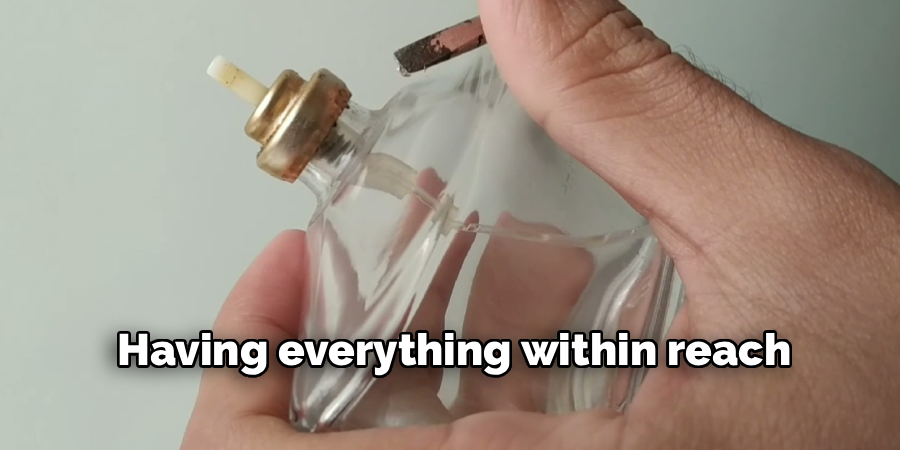
Having everything within reach matters more than it sounds. It stops you from walking around with glass on your gloves or leaving an open, broken bottle unattended while you hunt for a funnel. Spread a thick layer of paper towels across the surface to soak up drips. Set a small, sturdy box lined with newspaper beside you, ready to take any shards the moment you pull them out.
Step 2: Put on Your Protective Gear
Skin and eyes get protected before anything else. Pull on thick, cut-resistant rubber gloves — heavy-duty dishwashing gloves work well. Thin latex or surgical gloves won’t cut it, since a sharp shard can pierce them without much effort. Add protective eyewear so a splash of alcohol-heavy liquid or a flying splinter can’t reach your eyes.
Closed-toe shoes and long sleeves are a sensible call as well. A cracked bottle can give way without warning when you press on it, sending small fragments outward. None of this is fussy overcaution; it’s the difference between salvaging a scent you love and spending your evening in the emergency room.
Step 3: Stabilize the Broken Container
Look the bottle over without squeezing it. Get a sense of how sound it actually is. If the bottom is whole and only the top has sheared away, lift it gently by the thickest, sturdiest part of the base and rest it on the paper towels. When the bottle feels wobbly or fragile, prop it against something heavy and stationary, like a coffee mug, so it stays upright on its own.
Holding a badly cracked bottle in midair is asking for trouble. The grip you need to keep it steady may be exactly the pressure that makes it collapse in your hand. Keep the base planted on the table instead. The liquid settles, and the glass is far less likely to fail while you work.
Step 4: Remove the Largest Glass Shards
Reach for the tweezers and lift out the big, loose pieces sitting inside or around the neck. Grip each shard firmly, draw it straight up, and drop it into your disposal box right away. Skip the fingers entirely, gloves or not — the tight angles can drive a sharp edge into the rubber and through to your skin.
Clearing these larger pieces opens a safe path for the next stage. Try not to stir the liquid as you go. The stiller it stays, the less chance there is of fine glass dust swirling up and mixing into the fragrance you’re hoping to keep.
Step 5: Suction the Liquid With a Syringe or Dropper
Take the clean syringe or a long glass dropper and ease the tip into the pool of fragrance. Pull the plunger back slowly, or squeeze and release the bulb, to draw the liquid up. Go gently. Rushing this part tends to pull in debris that’s settled at the bottom.
A syringe is usually your best bet, mostly because it gives you precise control over how much suction you apply. Work in small batches, a few milliliters at a time. This beats pouring by a wide margin. Pouring almost guarantees a spill, with good product running down the jagged sides and out of reach.
Step 6: Filter the Extracted Fragrance
Set your funnel into the neck of the clean decanter. Line it with fine cheesecloth, a clean coffee filter, or a fine metal mesh strainer. Dispense the liquid from the syringe slowly so the filter can do its job, catching the microscopic glass dust and splinters that may have slipped into the tube.
Let it seep through at its own pace. A coffee filter takes a few minutes because the paper is dense, and that’s fine. Don’t be tempted to skip this. Unfiltered glass particles can wreck the spray mechanism of your new bottle, and they’re a genuine hazard if you later spray them onto your skin.
Step 7: Repeat the Suction and Filtering Process
Go back to the broken bottle with the empty syringe and pull the next batch. Keep cycling — suction, transfer, filter — until you’ve taken out all the fragrance you can safely reach. As the level drops, you may need to tilt the base slightly to gather the last drops into a pool.
Tilt with real care, though. If the glass feels weak or the structure seems ready to give, leave those final drops where they are. The last milliliter sitting in a hazardous bottle isn’t worth a sliced finger.
Step 8: Clean the Workspace and Dispose of Glass Safely
With the liquid transferred and the new bottle capped, deal with the wreckage. Wrap the broken bottle and every shard in several thick layers of newspaper or cardboard. Tape the bundle shut so nothing sharp can poke through, then put it straight into your outdoor trash bin.
Wipe down the whole workspace with damp paper towels to lift any glass dust or sticky residue you can’t see, and bin those towels right away. Last, wash the syringe, funnel, and tweezers in warm, soapy water to clear the fragrance oils before you put them away.
Following these steps on how to get perfume out of broken bottle, you can safely and effectively handle any broken perfume bottles in the future.
Common Mistakes to Avoid
The error that trips people up most often is pouring the perfume straight from the broken bottle into a funnel. The liquid runs down the cracked outside, the product goes to waste, and the odds of the glass snapping climb.
Skipping filtration is another one, and it tends to end with glass dust clogging the new atomizer or scratching your skin. Then there’s the panic reflex — grabbing falling glass with bare hands, which causes some of the nastiest cuts. Reach for the safety gear, not the few drops.
Frequently Asked Questions
Can I Use a Coffee Filter to Strain Small Glass Shards?
Yes. An unbleached paper coffee filter does a fine job of catching microscopic glass dust and small shards. Set it inside a small funnel over your new bottle and dispense the liquid from the syringe slowly. Worth noting: paper filters soak up a little liquid, so you may lose a small fraction of the perfume in the transfer.
How Long Does Salvaged Perfume Last in a New Container?
Transferred properly into a clean, airtight glass bottle and kept somewhere cool and dark, salvaged perfume should hold up about as long as it would have in its original home. Air exposure is what degrades a fragrance over time, so the trick is to move quickly through the transfer and make sure the new cap or atomizer seals tightly.
What Is the Best Type of Replacement Bottle for Fragrances?
Go for a dark or opaque glass bottle with a good airtight spray top or stopper. Glass won’t react with the essential oils and alcohol in perfume, while cheaper plastic can break down over time and shift the scent. The darker glass adds another layer of protection, shielding the delicate fragrance molecules from ultraviolet light.
Next Steps for Protecting Your Fragrance Collection
Saving a damaged fragrance asks for care and a steady hand, but stick to the right safety steps, and it works more often than you’d expect. Secure the area, use a syringe for controlled extraction, filter the liquid properly, and you can recover what you paid for without bleeding for it.
Heading off the next accident is worth a thought, too. Keep your most valuable bottles on lower, stable shelves rather than high countertops where a passing elbow can do damage. A few durable travel atomizers can help as well, letting you decant a little for daily use while the heavy master bottles stay tucked away in a cool, dark cabinet. Thanks for reading this guide on how to get perfume out of broken bottle.

About the Author
Jane Hubbard is a passionate beauty expert with a wealth of experience in makeup, hair, and overall beauty techniques. After years of working as a hairdresser specialist, she followed her entrepreneurial spirit and started her own consultancy business.
Jane has always been driven by her desire to help others feel confident in their own skin, and she does this by sharing her knowledge, experiences, and practical beauty tips. Through her consultancy, she empowers individuals to embrace their unique beauty, offering tailored guidance that boosts both self-esteem and personal style.
Professional Focus
Specializes in makeup, hairstyling, and beauty consulting.
Provides personalized beauty advice, tips, and techniques to help individuals feel confident in their appearance.
Dedicated to staying up-to-date with the latest industry trends and developments.
Passionate about creating a comfortable and empowering experience for every client.
Education History
University of Craft and Design – Bachelor of Fine Arts (BFA) in Woodworking and Furniture Design
Woodworking Apprenticeships – Extensive hands-on training with skilled craftsmen to refine carpentry and furniture making techniques
Online Courses & Masterclasses – Continued education in advanced woodworking techniques, design principles, and specialized tools
Expertise:
Makeup artistry, hairstyling, and beauty consulting.
Personalized beauty techniques to enhance confidence and self-expression.
Educating clients on how to maintain their beauty routines at home.