

Spilling nail polish on a comforter can feel like one of those absurdly specific disasters that happen in about two seconds and then ruin your mood for the rest of the evening. One slip of the bottle, one bright streak across the bedding, and suddenly your relaxing manicure setup looks like a cleanup job. The good news is that the stain may not be permanent. If you move fairly quickly and use the right method, there is a decent chance you can lift the polish without making the fabric worse.
That said, comforters are not all built the same. Some can handle careful spot treatment at home. Others really cannot. What follows is a practical, fabric-conscious way to deal with the spill while lowering the risk of spreading it, setting it, or damaging the shell. In this guide on how to get nail polish out of comforter, we’ll go over the steps you should take to prevent any further damage to your comforter and successfully remove the nail polish stain.
Things to Check Before You Start
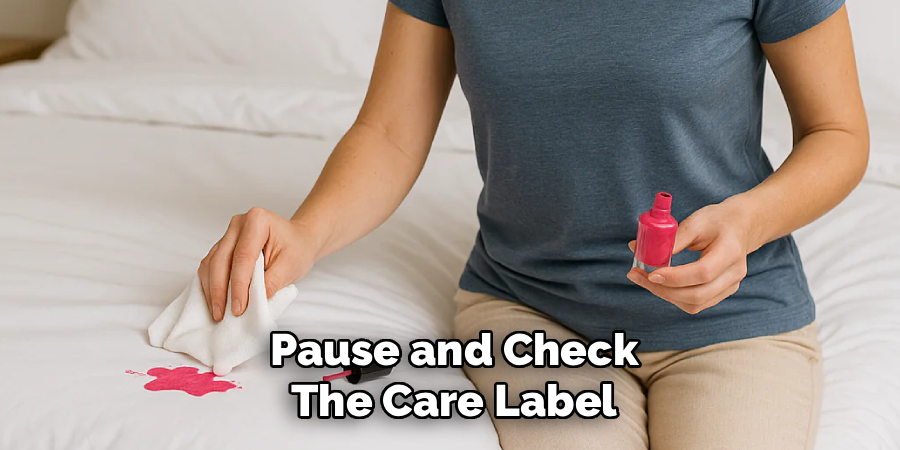
Before you reach for any remover, pause and check the care label. It sounds boring. It matters anyway. That tag will usually tell you whether the comforter can be washed at home or whether it should be dry-cleaned only.
Material makes a difference here. Silk, wool, satin, and some synthetic blends may react badly to solvents, even mild ones. In some cases, the stain itself is less damaging than an aggressive cleaning attempt. So start there.
After that, test whatever product you plan to use on a hidden area, such as an inside seam or a tucked corner near the edge. A small spot test may show you very quickly whether the fabric dye bleeds or the texture changes. If either happens, stop. Better a visible polish mark than a larger faded patch.
Materials You’ll Need
It helps to gather everything before you start, especially if the spill is still wet. Once the polish dries, the job usually gets slower and a bit more stubborn.
You will likely need:
- non-acetone nail polish remover
- clean white microfiber cloths or plain white paper towels
- cotton swabs
- liquid dish soap
- cold water
- a dull scraping tool, such as a butter knife, plastic card, or spoon edge
A quick note on the remover: non-acetone is usually the safer choice for fabric because acetone can damage certain synthetic fibers, including acetate and modacrylic. Even so, “safer” does not mean harmless. Use it carefully.
7 Simple Step-by-step Guidelines on How to Get Nail Polish Out of Comforter
Step 1: Gently scrape off the excess
If the polish is still wet or sitting in a thick blob on the surface, deal with that first. Do not rub. Really, do not. Use a dull edge to lift off as much of the excess as you can.
Work inward from the outer edge of the spill toward the center. That one small habit can help keep the stain from spreading farther across the fabric. Try to skim the surface instead of pressing down into it. Comforters have layers, and once polish gets pushed deeper into the fill, cleanup becomes much more difficult.
Wipe the scraper after each pass so you are not just moving the polish to a clean area.
Step 2: Test the cleaning solvent
This is the step people tend to rush, usually because the stain looks urgent. It is urgent, yes, but not more urgent than avoiding fabric damage.
Apply a tiny amount of non-acetone remover to a hidden section of the comforter. Wait a few minutes. Then press a white cloth or paper towel onto the spot. If color transfers from the fabric, or the material feels stiff, rough, thinned out, or oddly shiny, that is your warning sign.
At that point, home treatment may not be the best move. A professional cleaner could be the safer option, especially if the comforter was expensive or delicate to begin with.

Step 3: Dab the stain with remover
If the test spot looks fine, you can move to the actual stain. Dampen a cotton swab or the corner of a white cloth with the non-acetone remover. Damp is enough. You do not want it dripping.
Now dab the stained area carefully. Stay on the polish itself as much as possible rather than soaking the surrounding fabric. Let the remover sit for a few seconds so it can begin loosening the dried or semi-dried polish.
You may notice color transferring almost right away. That is a good sign. What you do not want to do is pour remover directly from the bottle onto the comforter. It is too easy to overdo it, and once the area gets saturated, control goes out the window.
Step 4: Blot, don’t scrub
After the remover has had a moment to work, press a clean white cloth or paper towel against the spot. Blot gently. Lift. Reposition. Blot again.
This part can feel slow, which is annoying, but slow is better than aggressive. Scrubbing tends to grind pigment into the weave and rough up the fabric surface. On padded bedding, it can also force the stain farther down into the batting or fill, where it becomes harder to remove and harder to see clearly until the area dries.
Switch to a clean section of cloth each time you blot. Otherwise, you risk reapplying the pigment you just lifted.
Step 5: Repeat as needed
For lighter shades or very fresh spills, one round may do most of the work. Darker polish, glitter formulas, and thicker spots usually take longer. Sometimes much longer.
Repeat the same sequence: apply a little remover, wait briefly, then blot with a clean white cloth. Continue until little or no color is transferred. It may take several passes. That is normal.
This is one of those chores where patience genuinely helps. Flooding the stain with solvent to speed things up usually backfires. A controlled approach tends to be more effective and less risky.
Step 6: Clean the area with dish soap and cold water
Once the visible polish is gone, you still have remover residue in the fabric, and that needs to come out, too. Mix a few drops of liquid dish soap into cold water. Dip a clean cloth into the solution and dab the treated area.
Dish soap can help break down leftover residue without being overly harsh. Use cold water rather than hot. Heat may set any remaining trace of pigment, especially if there is still a faint tint you cannot fully see while the fabric is wet.
After that, take another clean cloth dampened with plain cold water and blot the area to rinse out the soap.
Step 7: Air dry and inspect in good light
Press the damp section with a dry towel to remove excess moisture, then let the comforter air dry fully. A fan or open window may help, depending on the room. Avoid the dryer for now.
This matters more than it may seem. Heat can set whatever is left behind, and faint stains often look very different once the fabric is dry. What looked gone while damp may reappear as a pale shadow later. When the area is completely dry, check it in natural light if possible. If you still see a trace, repeat the gentle cleaning process before washing or drying the comforter normally.
Following these steps on how to get nail polish out of comforter can help save your bedding and avoid costly replacements.
What NOT to Do?
A few mistakes tend to make this kind of stain worse in a hurry.
Do not scrub the spot with force. That usually spreads the polish and roughs up the fabric.
Skip hot water. Also, skip the dryer until you are confident the stain is gone.
Avoid pure acetone on fabrics containing acetate, triacetate, or modacrylic. It can damage or even dissolve those fibers.
And use only white cloths or paper towels for blotting. Colored towels can bleed when mixed with solvent, which is not the kind of surprise you need in the middle of this.
Tips to Prevent Future Stains
The easiest prevention tip is the least glamorous one: try not to paint your nails on the bed. Soft bedding and open bottles are a bad combination. Convenient, yes. Stable, not at all.
If you do your nails in the bedroom, put down an old towel, a waterproof pad, or even a tray across your lap first. Keep the bottle upright on a hard, flat surface whenever possible. Close the cap between coats if you are the sort of person who gestures while talking or reaches for your phone mid-manicure. Many of us are.
A small storage caddy or shallow tray also helps. It keeps removers, polish, and tools from tipping over on uneven bedding.
When to Seek Professional Cleaning?
Sometimes home treatment is reasonable. Sometimes it is not.
If the comforter is silk, wool, vintage, heirloom-quality, or labeled dry-clean only, professional cleaning is probably the safer route. The same goes for large spills that soak through the outer fabric and into the inner filling. Surface stains are one thing. Deep saturation is another.
You should also stop and hand it off if your test area shows dye transfer, fabric warping, thinning, or any change in texture. At that point, the cleaning method may become a bigger problem than the stain.
Frequently Asked Questions
Q1: Can I Use Hairspray To Remove Nail Polish From Fabric?
A1: Sometimes, maybe. Hairspray often contains alcohol, which can help loosen certain stains, including some nail polish formulas. But it is not a first-choice option. It can leave a sticky residue, and the results are inconsistent. If you try it, use only a small amount, blot gently, and test it on a hidden area first.
Q2: Does Rubbing Alcohol Work On Dried Stains?
A2: It can. Rubbing alcohol may help soften dried polish on fabrics such as cotton or microfiber. Apply a small amount with a cotton swab, let it sit briefly, and blot with a clean white cloth as the stain loosens. As with remover, test a hidden spot first. Some fabrics tolerate alcohol well enough; others do not.
Q3: How Do I Get Polish Out Of A White Comforter Without Bleach?
A3: Bleach is usually not the best answer here. It can weaken fibers and, on some white fabrics, leave yellowing rather than fixing the problem. A non-acetone remover followed by dish soap and cold water is generally the safer route. If a faint mark remains, a paste of baking soda and water may help lift it a bit. Some people also use hydrogen peroxide on white fabric, but that should still be patch-tested before full use.

Wrapping Up Your Stain Removal Journey
A nail polish spill looks dramatic, but it does not always mean the comforter is ruined. In many cases, careful spot treatment is enough. The basic idea is simple: remove the excess, test first, dab sparingly, blot patiently, then clean out the residue.
That said, caution matters just as much as speed. Fabric type, dye stability, and care instructions all affect what is safe. If you keep those limits in mind, you stand a much better chance of getting the stain out without creating a second problem beside it. Thanks for reading this guide on how to get nail polish out of comforter.

About the Author
Jane Hubbard is a passionate beauty expert with a wealth of experience in makeup, hair, and overall beauty techniques. After years of working as a hairdresser specialist, she followed her entrepreneurial spirit and started her own consultancy business.
Jane has always been driven by her desire to help others feel confident in their own skin, and she does this by sharing her knowledge, experiences, and practical beauty tips. Through her consultancy, she empowers individuals to embrace their unique beauty, offering tailored guidance that boosts both self-esteem and personal style.
Professional Focus
Specializes in makeup, hairstyling, and beauty consulting.
Provides personalized beauty advice, tips, and techniques to help individuals feel confident in their appearance.
Dedicated to staying up-to-date with the latest industry trends and developments.
Passionate about creating a comfortable and empowering experience for every client.
Education History
University of Craft and Design – Bachelor of Fine Arts (BFA) in Woodworking and Furniture Design
Woodworking Apprenticeships – Extensive hands-on training with skilled craftsmen to refine carpentry and furniture making techniques
Online Courses & Masterclasses – Continued education in advanced woodworking techniques, design principles, and specialized tools
Expertise:
Makeup artistry, hairstyling, and beauty consulting.
Personalized beauty techniques to enhance confidence and self-expression.
Educating clients on how to maintain their beauty routines at home.