

Applying perfume to fabric rather than skin can significantly extend how long your scent lasts. Key strategies include choosing high-concentration fragrances like Eau de Parfum, targeting natural fiber garments, spraying from the correct distance, and layering scent across both skin and clothing for a slower, richer release.
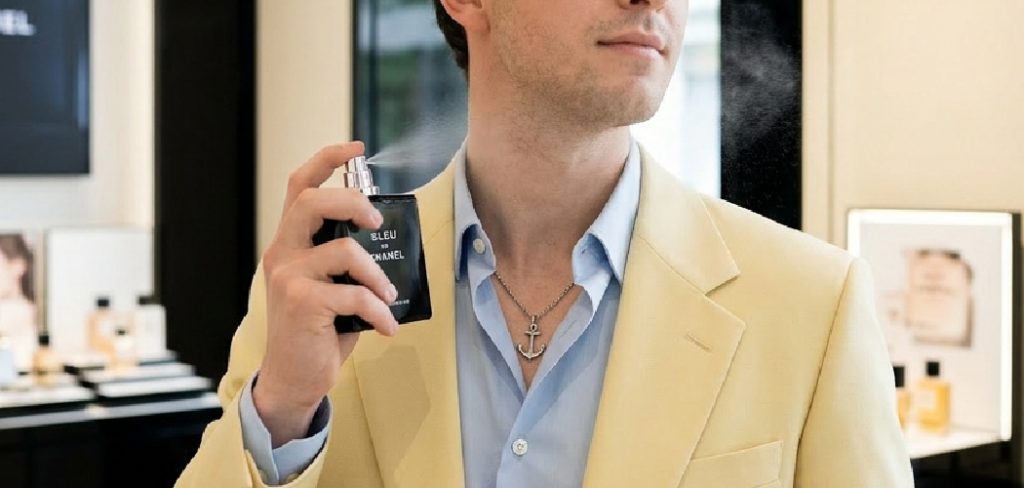
Fabric holds fragrance differently than skin, and often far more effectively. But making this work in your favor takes a little more thought than a quick spritz before leaving the house. From understanding how fragrance concentrations affect longevity to knowing which fabrics are worth targeting, a few deliberate adjustments can meaningfully change how long your perfume lasts throughout the day. In this guide on how to make perfume last longer on clothes, we break down the top tips for extending your fragrance’s wear on fabric.
Perfume is one of those finishing touches that can completely shift how you feel walking out the door. But there’s something quietly deflating about spritzing your favorite scent in the morning, only to find it’s gone by noon. If your fragrance fades faster than you’d like, the problem may not be the perfume itself—it may be where you’re applying it.
Why Does Perfume Last Longer on Clothes Than on Skin?
Skin is an active surface. It produces oils, sweats, and sheds cells continuously—processes that break down fragrance molecules faster than most people realize. Fabric behaves very differently. It’s static, free from the interference of body heat, shifting pH levels, or moisture, which is why a scarf you spritzed two days ago might still carry a trace of something lovely.
Clothing also functions as a slow-release mechanism. As you move, friction between fabric and air gently diffuses the scent around you, creating a subtle trail. This explains why people associate certain smells with specific garments—fabric genuinely absorbs and holds fragrance in ways skin simply can’t replicate over time.
How Fragrance Concentration Affects Longevity on Fabric
Not all perfumes perform equally on clothing, and concentration is largely why. Eau de Parfum (EDP) contains between 15–20% fragrance oil, making it one of the most effective options for fabric application. Eau de Toilette (EDT) sits at around 5–15%—lighter, still noticeable, but quicker to fade. Eau de Cologne (EDC) typically falls below 5% fragrance oil, which means longevity suffers regardless of where you apply it.
For the best results on clothing, an EDP or pure parfum (which can reach up to 40% fragrance oil) gives more aromatic compounds the opportunity to bond with fabric fibers. Higher concentration translates, fairly directly, into longer wear time.
Which Fabrics Hold Fragrance Best?
Fabric composition matters more than most people expect. Natural fibers—wool, cashmere, cotton—have a porous structure that traps fragrance molecules deep within the weave. Wool in particular holds scent exceptionally well, sometimes carrying a fragrance through an entire day and into the next.
Synthetic fabrics like polyester and nylon tend to be less porous. They may not hold fragrance as effectively, and some are prone to staining when spritzed directly. Silk sits somewhere in the middle—it carries scent beautifully but requires careful handling given how sensitive it is to liquids. When longevity is the priority, natural fiber garments are consistently the stronger choice.
7 Steps on How to Make Perfume Last Longer on Clothes
Step 1: Start With Clean, Dry Fabric
Freshly laundered clothes provide a neutral base that allows the true character of your fragrance to come through. Residual moisture, competing detergent scents, or built-up odor all interfere with how your perfume smells—and how well it adheres.
Step 2: Hold the Bottle at the Correct Distance
Spray from approximately 15–20 centimeters (6–8 inches) away from the fabric. This allows the mist to disperse evenly before landing, preventing oversaturation in a single spot. Spraying too close risks staining delicate fabrics and creates an uneven, overwhelming burst rather than a balanced application.
Step 3: Target Areas That Generate Movement
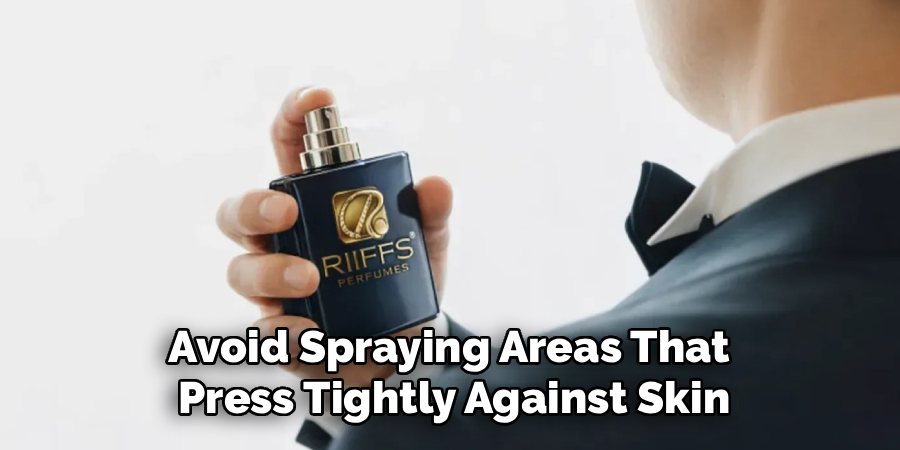
Focus on the collar, cuffs, the hem of a skirt, or the inner lining of a jacket. These zones naturally disperse fragrance as you move. Avoid spraying areas that press tightly against skin for extended periods, as this increases the risk of staining without meaningfully improving longevity.
Step 4: Layer Your Fragrance Across Skin and Fabric
Apply perfume to pulse points first—wrists, neck, behind the ears—then mist lightly over outer clothing. This creates a two-stage release: skin delivers the top and heart notes quickly, while fabric holds onto base notes and releases them slowly over hours. The result is a richer, more complex scent profile that lasts noticeably longer.
Step 5: Let the Perfume Dry Before Dressing
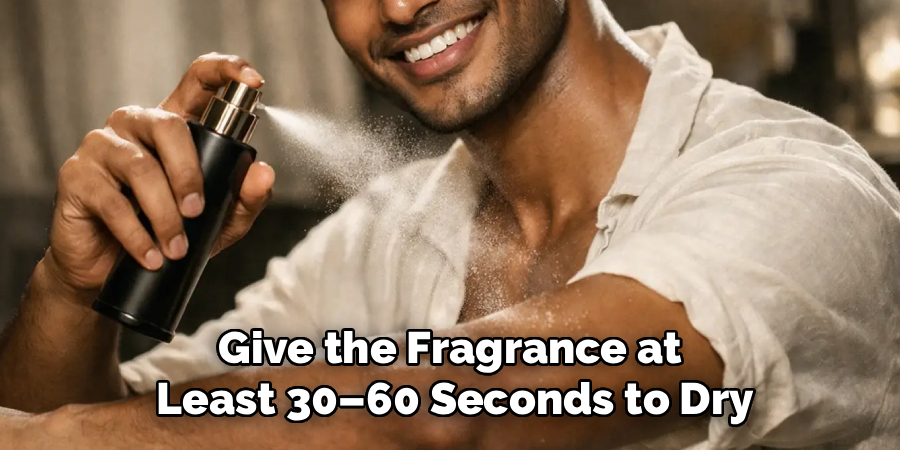
Give the fragrance at least 30–60 seconds to dry before layering garments over the top. Wet perfume pressed between fabric layers transfers unevenly and may stain lighter colors. Allowing it to dry also lets the alcohol in the formula evaporate, leaving behind the concentrated aromatic oils that carry the scent.
Step 6: Store Fragranced Clothes Correctly
Store spritzed garments in a cool, dry place away from direct sunlight. UV light and heat both degrade fragrance molecules—even a well-applied piece will lose its scent faster if stored in a sunny wardrobe. Garment bags help by trapping scent while protecting the fabric between wearings.
Step 7: Refresh Lightly as Needed
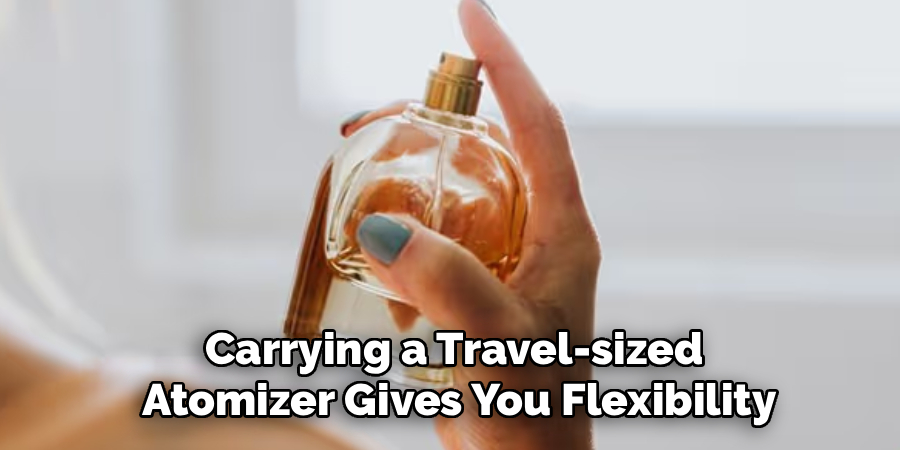
A single spritz to the collar or cuffs mid-day is usually enough to revive a scent that has started to fade. Carrying a travel-sized atomizer gives you flexibility without overdoing it.
Following these steps on how to make perfume last longer on clothes will surely help you enjoy your favorite scent throughout the day.
Additional Tips to Extend Fragrance Wear Time
- Use an unscented fabric spray as a base. Unscented linen sprays create a light moisture barrier that may help fragrance molecules bond more effectively to fabric.
- Apply an unscented moisturizer to skin before spraying. This gives scent molecules something to cling to, extending overall projection.
- Avoid rubbing fabric after spraying. Rubbing breaks down fragrance molecules and dulls the overall effect.
- Move up in concentration. Switching from EDT to EDP can add several hours of wear with no other changes to your routine.
Common Mistakes That Undermine Your Fragrance
Several habits quietly shorten how long a scent lasts—often before you’ve even left the house. Spraying directly onto synthetic fabrics without patch-testing first is a common error; some synthetics absorb poorly and may stain. Over-applying is another: more product doesn’t extend longevity, it just creates an overwhelming opening that fades at roughly the same rate.
Storing perfume in a bathroom exposes it to heat and humidity, degrading the formula over time. Skipping moisturizer on the skin reduces the surface fragrance that has to cling to it. And applying perfume over a strongly scented detergent creates competing smells that muddle the fragrance entirely.
How Seasonal Changes Affect Fragrance on Clothing?
Summer heat amplifies projection, so lighter concentrations on fabric tend to work better—heavy EDPs can tip into overwhelming territory in warm weather. Linen and cotton are the sensible choices, as they breathe well while still retaining a reasonable amount of scent.
In autumn and winter, wool and cashmere come into their own. The denser weave traps scent molecules for extended periods, and richer fragrance families—woody, amber, or oriental notes—perform particularly well in cooler temperatures, where cold air slows diffusion and allows base notes to linger. During spring, layering a light skin application with a fabric spritz tends to offer the best balance of freshness and staying power.
Frequently Asked Questions
Can Perfume Permanently Stain Clothing?
Yes. Fragrances with high concentrations of essential oils, alcohol, or synthetic dyes are the most likely to stain, particularly on light-colored fabric. Spraying from the correct distance, allowing perfume to dry before fabric contact, and avoiding direct application to silk or very pale materials (without patch-testing first) all reduce the risk.
Is It Safe to Spray Perfume Directly on All Fabric Types?
No. Silk, satin, and pale or delicate fabrics are most vulnerable to staining or discoloration. Wool, cotton, and most denim handle direct fragrance application well. Always test a small, hidden area before applying generously to a garment you care about.
How Many Sprays Are Ideal for Clothing?
Two to three sprays are sufficient for most garments. Applying more product doesn’t extend longevity—it simply creates an overwhelming initial impact that fades at roughly the same rate. Even distribution across movement-heavy areas like collars and cuffs matters more than volume.
Does the Season Affect How Long Perfume Lasts on Fabric?
Yes, meaningfully. Heat accelerates diffusion, which amplifies projection but shortens the time a scent stays on fabric. Cold temperatures slow diffusion, allowing base notes to linger longer. Choosing your concentration and fabric type with the season in mind can make a real difference.
Your Fragrance, Made to Last
Getting more from your perfume doesn’t require expensive products or complicated routines. Selecting the right concentration, targeting the right fabrics, and applying with care can transform a scent that barely survives the morning into one that stays with you all day.
Start with one or two of the steps on how to make perfume last longer on clothes outlined here, and observe the difference before adjusting further. Fragrance is personal, and the ideal approach will vary depending on the specific scent, fabric, and environment. Experiment thoughtfully, and the combination that works best for you will become clear.

About the Author
Jane Hubbard is a passionate beauty expert with a wealth of experience in makeup, hair, and overall beauty techniques. After years of working as a hairdresser specialist, she followed her entrepreneurial spirit and started her own consultancy business.
Jane has always been driven by her desire to help others feel confident in their own skin, and she does this by sharing her knowledge, experiences, and practical beauty tips. Through her consultancy, she empowers individuals to embrace their unique beauty, offering tailored guidance that boosts both self-esteem and personal style.
Professional Focus
Specializes in makeup, hairstyling, and beauty consulting.
Provides personalized beauty advice, tips, and techniques to help individuals feel confident in their appearance.
Dedicated to staying up-to-date with the latest industry trends and developments.
Passionate about creating a comfortable and empowering experience for every client.
Education History
University of Craft and Design – Bachelor of Fine Arts (BFA) in Woodworking and Furniture Design
Woodworking Apprenticeships – Extensive hands-on training with skilled craftsmen to refine carpentry and furniture making techniques
Online Courses & Masterclasses – Continued education in advanced woodworking techniques, design principles, and specialized tools
Expertise:
Makeup artistry, hairstyling, and beauty consulting.
Personalized beauty techniques to enhance confidence and self-expression.
Educating clients on how to maintain their beauty routines at home.