

You dust on your powder foundation, hoping for that soft, even finish. Instead, it grabs onto every flaky patch and settles into the fine lines you forgot were there.
Sound familiar? It happens to almost everyone with dry skin.
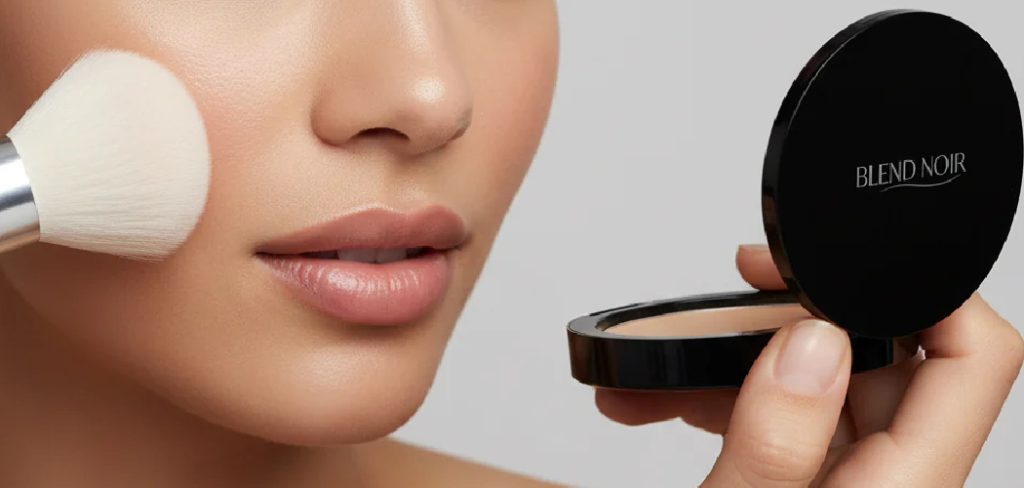
Powder has a bit of a reputation problem. People swear it looks cakey and tired on parched skin, and they’re not entirely wrong. But the real culprit usually isn’t the product itself.
More often, it comes down to prep and technique. Get those right, and powder can look surprisingly fresh, even glowy.
Learning how to use powder foundation with dry skin is less about buying the perfect product and more about setting the stage for it. This guide walks you through the prep, the tools, and a step-by-step method that treats dry skin kindly. A few small tweaks, and you may never dread reaching for that compact again.
Why Powder Foundation Feels Tricky on Dry Skin
Let’s start with what actually goes wrong. Understanding the problem makes the fixes feel a lot less mysterious.
Powder and dry skin have a complicated relationship, but it’s not unfixable.
How Powder Interacts With Dry Patches
Powder needs a smooth surface to sit on. Dry skin rarely offers one.
Loose or pressed powder tends to cling to raised flakes and gather in fine lines. That clinging is exactly what makes dryness look worse, not better, the moment the powder goes on.
The Role of Skin Prep
Here’s the part most people skip. Dehydrated skin gives powder nothing to grip, so it sits awkwardly instead of melting in.
That chalky, patchy finish everyone blames on the formula? It usually traces back to underprepped skin. The powder is just revealing what was already there.
Choosing the Right Formula
Formula matters too, though it’s often the smaller piece of the puzzle. A heavily mattifying powder built for oil control will fight dry skin at every turn.
Hydrating or luminous formulas behave far better. They add a soft glow rather than flattening everything into a dry, dusty matte.
Prepping Dry Skin Before You Begin
If you take away one thing from this article, let it be this. Great powder results start well before the powder.
Prep is where the real work happens, and it’s honestly the fun part.
Gentle Exfoliation to Remove Flakes
Flakes are powder’s worst enemy. A soft, weekly exfoliation clears away that dead surface skin so powder has somewhere smooth to land.
Keep it gentle, though. Over-scrubbing strips the skin and leaves it drier than before, which rather defeats the purpose.
Layering Hydration the Smart Way
Hydration does the heavy lifting here. A nourishing moisturizer paired with a hydrating serum plumps the skin and softens those tight, dry areas.
Think of it as building a cushion. When skin feels supple, powder tends to look supple too, instead of tight and flat.
Letting Products Absorb Fully
This step tests your patience, and it’s worth it anyway. Give your skincare a few minutes to sink in before you touch any makeup.
Rush it, and the products may pill or slide the moment powder meets them. Wait it out, and everything sits evenly. A short pause saves a lot of frustration.
Choosing the Right Powder Foundation
Not all powders are created equal, especially for dry skin. Picking the right one takes half the battle off your plate.
The goal is a formula that works with your skin rather than against it.
Hydrating and Luminous Formulas
Look for words like hydrating, radiant, or satin on the label. These formulas add a soft luminosity instead of a flat, powdery finish.
They tend to feel more comfortable through the day, too. A little glow goes a long way toward making dry skin look healthy rather than dehydrated.
Ingredients That Support Dry Skin
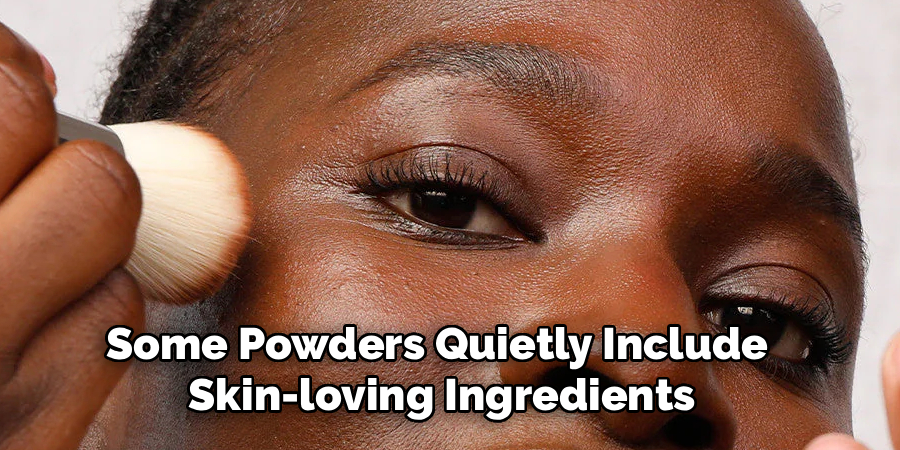
Some powders quietly include skin-loving ingredients. Humectants and gentle oils help the product feel comfortable and look fresh for hours.
You don’t need to memorize an ingredient list. Just lean toward formulas that mention hydration and steer clear of anything marketed as ultra-matte or long-wear oil control.
Shade and Finish Matters
Shade and finish deserve a moment of thought. A slightly dewy finish reads as natural on dry skin, while a bone-dry matte can look dusty.
Match your shade carefully as well. Dry skin shows unevenness more readily, so a close match keeps coverage looking seamless rather than mask-like.
Tools That Make a Difference
Your application tools might matter more than you’d expect. The right brush or sponge can completely change how powder settles on dry skin.
It’s an easy detail to overlook, and a rewarding one to get right.
Fluffy Brushes for a Light Layer
A soft, fluffy brush lays down a thin, airy veil of powder. That light touch is exactly what dry skin wants.
Dense, packed brushes tend to deposit too much at once, which encourages caking. When in doubt, reach for something soft and buffing rather than stiff.
Damp Sponges for a Fresh Finish
Here’s a small trick that changes everything. A lightly damp makeup sponge presses powder into the skin instead of dragging it across the surface.
The result looks smoother and more skin-like. It’s especially handy over stubborn dry areas where a brush alone can catch and cling.
Keeping Tools Clean
Clean tools apply powder more evenly, plain and simple. Product buildup on a brush leads to patchy, uneven coverage.
There’s also the skin side of it. Dry skin can be sensitive, and a dirty brush may nudge it toward irritation. A regular wash keeps both your finish and your skin happier.
Step-by-Step Guide on How to Use Powder Foundation with Dry Skin
This is the part that matters most, so take it slowly the first time through. Every application after this one gets quicker and more instinctive. None of it is complicated, promise.
Step 1: Prep and Deeply Hydrate Your Skin
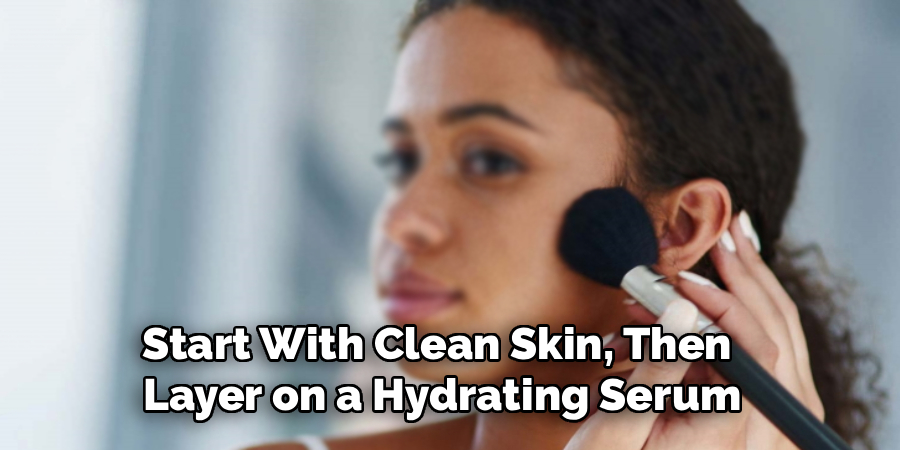
Start with clean skin, then layer on a hydrating serum and a moisturizer suited to dryness. This hydrated base is the single most important step for a smooth finish.
Well-moisturized skin gives powder something soft to grip. Let everything absorb fully before moving on, or you may find things pilling and separating later.
Step 2: Apply a Hydrating Primer
Next, smooth on a thin layer of hydrating or luminous primer across the face. Primer fills fine lines and softens dry patches so powder can glide on instead of catching.
Focus a little extra on the areas that tend to flake. Keep the layer light, though, so it grips the powder without feeling heavy or sliding around as the day wears on.
Step 3: Build Coverage in Thin Layers
Pick up a small amount of powder on a fluffy brush and buff it gently over the skin. Thin, buildable layers look far more natural than one heavy pass.
That single heavy pass is what cakes on dry areas. So go slow, concentrate coverage only where you need it, and pause between layers to see how the powder settles.
Step 4: Press Powder Into Dry Areas With a Damp Sponge
For the stubborn spots, dampen a makeup sponge and press it gently over the powder. Pressing, rather than dragging, melds everything into the skin for a smoother look.
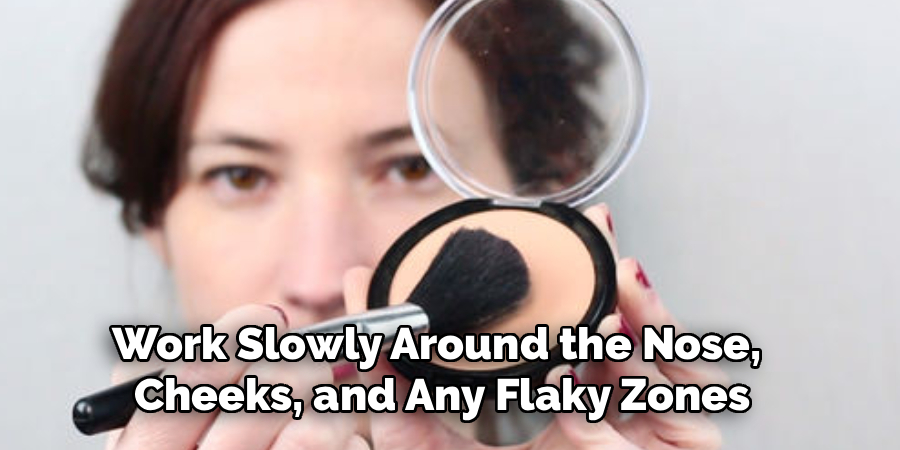
Work slowly around the nose, cheeks, and any flaky zones. This gentle motion helps the finish look fresh and radiant instead of dry and dusty.
Step 5: Add a Hydrating Boost Where Needed
If certain areas still look tight, give them a little revival. A light mist of hydrating setting spray, or a tiny touch of facial oil on dry zones, brings the skin back to life.
This quick step melts the powder into the skin and restores some glow. The finish softens, and those flat, chalky patches tend to disappear.
Step 6: Set Selectively and Check the Finish
Resist the urge to set your whole face. Instead, lightly set only the oil-prone zones, leaving drier areas to keep their natural radiance.
Then step back in good lighting and take a proper look. A quick check and a gentle blend here or there pull the whole finish together beautifully.
Locking In a Smooth, Long-Lasting Finish
Getting the foundation on is half the job. Keeping it looking fresh is the other half, since dry skin can shift as the hours pass.
A few smart habits stretch that fresh finish well into the day.
Using a Hydrating Setting Spray
A fine mist of hydrating setting spray fuses your layers. It also stops the powder from drifting back toward that dry, powdery look.
Hold the bottle at arm’s length and mist evenly. You’re aiming for a light veil, not a soaking, so a couple of gentle passes will do.
Midday Touch-Up Tips
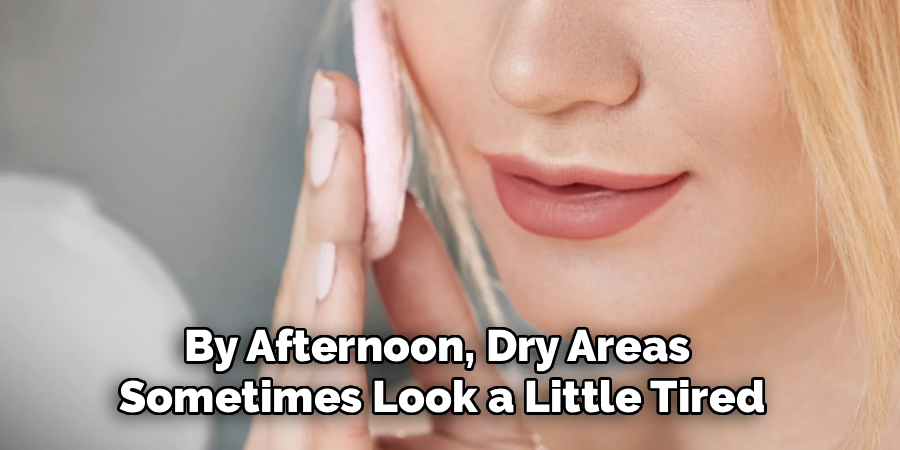
By afternoon, dry areas sometimes look a little tired. The instinct is to pile on more powder, which almost always backfires.
Instead, refresh with a damp sponge or a quick mist of setting spray. Pressing hydration back in beats adding another layer that could worsen the texture.
Avoiding Excess Powder Over the Day
Less really is more with dry skin. Reapply sparingly, and only where you genuinely need it.
Layering powder over powder tends to accumulate into cakey buildup. A light hand keeps the finish looking like skin rather than a mask by the end of the day.
Common Mistakes to Avoid
We all stumble while figuring this out, so don’t be discouraged. Knowing the usual pitfalls simply helps you sidestep them faster.
Most trace back to one of these three habits.
Skipping Skin Prep
Rushing past hydration is the fastest route to a flaky, patchy result. No powder, however good, can fully rescue underprepped skin.
Prep isn’t the boring part you can skip. It’s the part that decides how everything else looks.
Applying Too Much at Once
Heavy layers settle straight into dry lines and creases. What felt like thorough coverage ends up looking thick and obvious.
A slow, buildable approach solves this almost entirely. Tap off excess before it hits your face, and you’ll rarely overdo it.
Choosing a Heavily Mattifying Formula
Ultra-matte powders made for oily skin can leave dry skin looking tight and dull. They soak up the very moisture your skin is short on.
If your powder consistently looks dusty, the formula may be fighting you. Switching to something hydrating could fix the problem you assumed was your technique.
Building a Routine That Works for Your Skin
Once the individual steps click, it’s worth turning them into a habit. A repeatable routine keeps dry skin looking its best without much thought.
The trick is letting your skin guide the small adjustments.
A Simple Daily Prep Ritual
A quick morning rhythm goes a long way. Cleanse, hydrate, prime, then apply. That sequence sets the stage for a flawless finish nearly every time.
Keep it simple enough that you’ll actually do it. Consistency matters more than a complicated ten-step lineup.
Adjusting With the Seasons
Dry skin rarely stays the same year-round. Colder months often call for richer prep, while summer may need something lighter.
So tweak as conditions change. What worked beautifully in July might leave you flaky in January, and that’s completely normal.
Listening to Your Skin
Pay attention to how your skin feels and looks on any given day. Some mornings it wants extra hydration; others it barely needs a thing.
Adjust your prep and coverage to match. That kind of quiet responsiveness tends to serve dry skin better than any rigid formula ever could.
Conclusion
Learning how to use powder foundation with dry skin turns out to be less about avoiding powder and more about giving your skin the care it craves first. Prep it well, and powder stops being the enemy.
There’s a real satisfaction in glancing at the mirror and seeing a soft, radiant finish. No clinging flakes, no chalky cast, just skin that looks like skin.
The path stays the same each time. Deep hydration, a smart primer, thin and buildable layers, a gentle press with a damp sponge, then a hydrating set where it counts.
So treat each application as a chance to learn what your skin likes. Prep, layer, and press your way to a fresh look today, and you may find powder foundation becomes something you reach for with confidence rather than dread.

About the Author
Jane Hubbard is a passionate beauty expert with a wealth of experience in makeup, hair, and overall beauty techniques. After years of working as a hairdresser specialist, she followed her entrepreneurial spirit and started her own consultancy business.
Jane has always been driven by her desire to help others feel confident in their own skin, and she does this by sharing her knowledge, experiences, and practical beauty tips. Through her consultancy, she empowers individuals to embrace their unique beauty, offering tailored guidance that boosts both self-esteem and personal style.
Professional Focus
Specializes in makeup, hairstyling, and beauty consulting.
Provides personalized beauty advice, tips, and techniques to help individuals feel confident in their appearance.
Dedicated to staying up-to-date with the latest industry trends and developments.
Passionate about creating a comfortable and empowering experience for every client.
Education History
University of Craft and Design – Bachelor of Fine Arts (BFA) in Woodworking and Furniture Design
Woodworking Apprenticeships – Extensive hands-on training with skilled craftsmen to refine carpentry and furniture making techniques
Online Courses & Masterclasses – Continued education in advanced woodworking techniques, design principles, and specialized tools
Expertise:
Makeup artistry, hairstyling, and beauty consulting.
Personalized beauty techniques to enhance confidence and self-expression.
Educating clients on how to maintain their beauty routines at home.