

Makeup is supposed to help you feel put together, not leave you standing at the mirror with watery, angry eyes. Yet that sting is familiar to a lot of people. One swipe of mascara, a bit of shadow fallout, a liner pencil that seemed fine yesterday—and suddenly your eyes burn, your lids feel hot, and the whole routine goes sideways.
That reaction is not random. Eyes are delicate, and they do not tolerate friction, stray particles, harsh preservatives, or old product particularly well. In some cases, the problem is simple irritation. In others, it may point to sensitivity, dryness, or early infection. The good news is that most mild makeup-related burns settle down with quick, careful first aid. What matters most is not panicking and not making it worse.
This guide on how to stop burning eyes from makeup walks through what may be causing the burning, what to do right away, and how to lower the odds of it happening again.
Common Causes of Burning Eyes from Makeup
Sometimes the cause is mechanical. Tiny bits of mascara, powder shadow, or dried liner can slip into the tear film and scrape across the eye when you blink. It does not take much. A small flake can feel enormous once it is trapped under the lid.
Then there is ingredient sensitivity. Fragrance, preservatives, certain pigments, and adhesives used around the eyes can trigger redness or a stinging reaction, even in products you have used before without trouble. That is one of the frustrating parts: tolerance is not always consistent.
Old makeup is another common issue, and it is often overlooked. Mascara tubes and liquid liners stay moist, which means they can collect bacteria over time. If a product is expired—or just contaminated from repeated use—it may irritate the eye far more than a fresh one would. Contact lenses can add to the problem by holding residue against the surface of the eye instead of letting it wash away naturally.
Immediate Steps to Stop the Burning
The first impulse is usually to rub your eye. Try not to. Seriously. Rubbing can grind particles more deeply into the surface and, in some cases, leave a corneal scratch behind. That tends to hurt more, not less.
Start by washing your hands well. If you are going to touch the area around your eye, clean hands matter. After that, remove your contact lenses if you wear them. Lenses can trap makeup residue, saline, or irritants against the eye and prolong the burning.
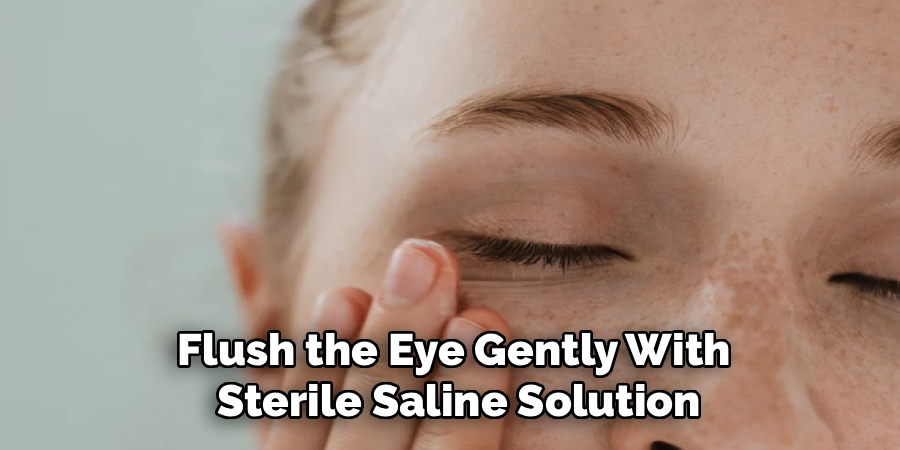
Next, flush the eye gently with sterile saline solution or preservative-free artificial tears if you have them nearby. A few drops may help, though sometimes you need a longer rinse to shift a stubborn particle. If saline is not available, cool, clean water can be used as a backup. Not ideal, but often better than doing nothing. The goal is simple: dilute whatever is irritating the eye and help it clear.
7 Simple Step-by-Step Guidelines on How to Stop Burning Eyes from Makeup
Step 1: Remove All Eye Makeup Immediately
If your eye starts burning, stop applying makeup and take off what is already there. Leaving product on the skin or lashes usually prolongs the irritation, especially if the culprit is a pigment, preservative, or adhesive still sitting near the lash line.
Use a gentle, fragrance-free remover and a soft cotton pad or reusable cloth. Wipe downward and away from the eye rather than toward it. Slow is better here. The skin around the eyes is thin, and rough scrubbing can leave it sore even after the burning fades.
Once most of the makeup is gone, rinse your face with lukewarm water. Make sure residue is not clinging to the lashes or sitting in the corners of the eyes. Pat dry with a clean towel. Do not press on the eyeball itself. If the sting continues after the makeup is off, that usually suggests something has already reached the eye surface.
Step 2: Flush Your Eyes with Saline Solution
This is often the most useful step. If a bit of product has gotten into the eye, flushing can help move it out before it causes more irritation.
Use sterile saline if possible. Tilt your head over a sink and angle the irritated eye slightly downward so runoff does not move into the other eye. Then apply a steady stream from the inner side outward. Blink often while you do this. Blinking helps the liquid spread across the eye and may dislodge trapped debris.
Keep going for several minutes if needed. Not ten seconds—longer. People tend to stop too soon. If all you have is water, use it carefully and switch to saline later if you can. Tap water is not always well tolerated, particularly if your eye is already inflamed, so it is more of a fallback than a first choice.
Step 3: Apply a Cold Compress for Relief
Even after the particle is gone, the eye may still feel raw. That does not necessarily mean something is still stuck there. Sometimes the tissue is just irritated and needs time to calm down.
A cold compress can help with that. Use a clean washcloth dampened with cool water, or a chilled gel mask wrapped in clean fabric. Avoid anything icy enough to feel harsh. Cool is usually enough.
Lay it over closed eyelids for about 10 to 15 minutes. If the burning or swelling returns, repeat the compress after a short break. It will not fix the underlying cause, but it can reduce puffiness and make the eye more comfortable while the surface settles.
Step 4: Use Lubricating Artificial Tears
Flushing removes debris, but it can also wash away some of the tear film that normally protects the eye. That is where lubricating drops come in.
Choose preservative-free artificial tears if possible, especially if your eyes already tend to be dry or reactive. Pull down the lower lid gently, place one or two drops in the pocket, and close the eye slowly. No need to blink hard. Let the drops spread on their own.

This step often helps with that scratchy, post-irritation feeling—the one that makes you think there is still makeup in the eye even when there may not be. You can usually reapply preservative-free tears several times during the day, though if you find yourself needing them constantly, something else may be going on.
Step 5: Clean Your Makeup Brushes and Tools
If this has happened once, it is worth looking at the tools involved. Brushes, lash curlers, blending sponges, and even pencil sharpeners collect residue quickly. Add skin oils and bathroom humidity, and the setup is not great.
Wash eye brushes and tools thoroughly with gentle soap or brush cleanser. Rinse until the water runs clear. With brushes, lay them flat to dry rather than standing them upright while wet, since water can loosen the glue in the handle over time.
This is not glamorous advice, admittedly, but it matters. Dirty tools are a common source of repeated irritation. Weekly cleaning is a reasonable target for items used around the eyes, and more often may make sense if you have sensitive skin or frequent flare-ups.
Step 6: Inspect and Discard Expired Cosmetics
A surprising number of eye problems come down to product age. Mascara is one of the biggest offenders. It goes near the eye, gets exposed to air every time the wand is pumped in and out, and stays moist inside the tube. That combination is not ideal.
Check the small jar symbol on the packaging if it is still visible. It usually tells you how long the product is meant to be used after opening. As a general rule, mascara should be replaced around the three-month mark. Liquid liners do not last forever either. Powder shadows typically last longer, though they are not immune to contamination.
If a product smells different, has changed texture, flakes more than it used to, or suddenly starts irritating your eyes, do not talk yourself into keeping it. Throw it out. Replacement is cheaper than an eye infection.
Step 7: Give Your Eyes a Break from Cosmetics
Once the immediate problem is under control, give your eyes some rest. That may be the step people resist most, but it is often the one that helps the most.
Do not put fresh eye makeup onto skin or lashes that are still irritated. Wait at least 24 to 48 hours after a more intense episode of burning, and longer if redness or discomfort lingers. During that time, use artificial tears as needed and avoid anything that requires rubbing to remove later.
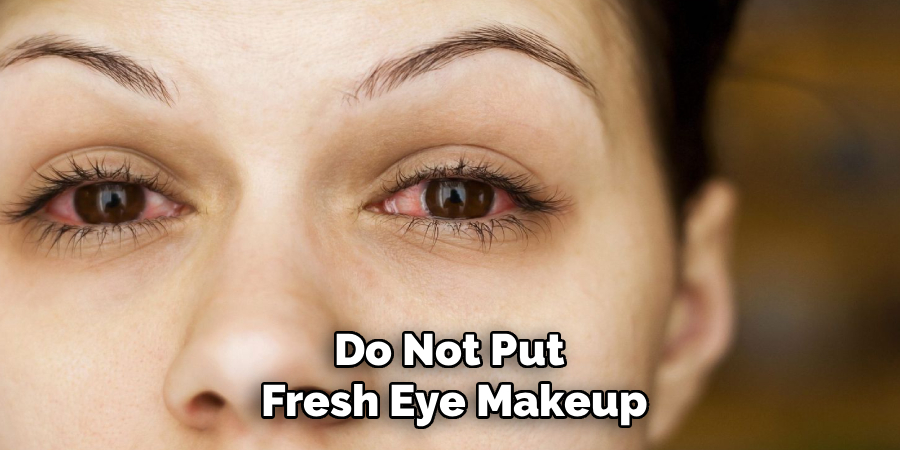
If you absolutely have to get ready for an event, keep products away from your eyes altogether if possible. Skin tint, lip color, maybe brows—fine. Mascara, liner, lash glue, shimmer fallout? Better skipped until the eye feels fully normal again.
Following these steps on how to stop burning eyes from makeup can help prevent further irritation and damage to your eyes.
Safe Makeup Removal Practices
A lot of irritation starts at the end of the day rather than the beginning. Removal matters just as much as application, maybe more.
Use a remover made for the eye area, particularly if you wear long-wear or waterproof products. Soak a cotton pad, press it gently over the closed lid for several seconds, and let the product break down before wiping. That pause makes a real difference. Without it, people scrub—and scrubbing near the eyes rarely ends well.
Oil-based removers can work especially well for waterproof mascara because they reduce the need for friction. Afterward, wash the face with a gentle cleanser, so leftover remover and pigment do not sit near the lashes overnight.
Preventing Future Eye Irritation
Prevention is less dramatic than treatment, but it saves trouble. A few habits go a long way.
Try not to apply eyeliner on the inner waterline if your eyes are sensitive. It may look polished, but it also places the product directly where tears circulate. Tap excess powder off shadow brushes before bringing them near the lid. Replace eye makeup regularly. Do not share mascara, liner, or brushes, even with people you know well.
Ingredient choice matters too. Some people do better with fragrance-free products or simpler formulas. “Hypoallergenic” can be helpful as a label, though it is not a guarantee. If your eyes burn often, keeping a short list of products that have caused problems may be more useful than relying on packaging claims.
When to Stop Using Makeup Completely?
There are times when the right answer is not “switch products” or “wait a day.” It is “stop for now.”
If you notice discharge, crusting along the lashes, marked swelling, increasing redness, or pain that feels out of proportion to simple irritation, pause all eye makeup. Those symptoms may suggest infection, significant inflammation, or a reaction that needs more than home care.
If you do end up with pink eye, a stye, or another obvious infection, it is usually wise to discard the products you were using around that time—especially mascara, liquid liner, and anything that touched the eye area directly. Otherwise, you may end up reinfecting yourself later. Annoying, yes. Still worth it.
When to See a Doctor?
Most mild cases improve fairly quickly once the product is removed and the eye is flushed. Not every irritated eye needs a clinic visit. Some do.
See an eye doctor if the burning remains intense for more than a few hours, or if symptoms include blurred vision, pronounced light sensitivity, severe pain, or the feeling that something is stuck in the eye and will not move. That last one can sometimes point to a corneal abrasion. Persistent redness over several days, especially with discharge, may also suggest infection.
If you wear contact lenses and the pain is significant, it is better to be cautious. Eye symptoms can worsen faster in lens wearers. Vision is not something to gamble with.
Frequently Asked Questions
Q1: Can I Use Water to Flush My Eyes Instead of Saline?
A1: Yes—if saline is not available, clean water can be used in the moment. It is not the preferred option, though. Saline is gentler because it is closer to the eye’s natural balance, while tap water may contain minerals or other irritants that sting on already inflamed tissue. If possible, use bottled water or previously boiled water that has cooled. Ideally, keep sterile saline on hand if you wear eye makeup often.
Q2: Why Does My Mascara Suddenly Burn My Eyes After Months of Use?
A2: The product may have changed even if the label looks the same. Mascara collects air, skin debris, and bacteria over time, especially with regular use. It can also dry out, which makes flaking worse. Either issue may explain why a tube that once felt fine now burns. If the mascara is older than about three months, replacing it is the safest move.
Q3: Are Waterproof Cosmetics Worse for Sensitive Eyes?
A3: Often, yes—though not always because of the formula itself. The bigger issue is removal. Waterproof products tend to need stronger removers and more rubbing, and that extra friction can irritate both the eyelid skin and the eye surface. Some people tolerate them well. Others do not. If your eyes are easily irritated, standard washable formulas are usually the easier option for daily wear.
Safeguarding Your Vision and Your Style
You do not have to give up makeup because one product burned your eyes. Most of the time, the better approach is more practical: cleaner tools, fresher products, gentler removal, quicker response when irritation starts.
Pay attention to what your eyes are telling you. If something stings, flakes, blurs your vision, or leaves you red for hours, that is useful information—not something to push through for the sake of finishing a look. A careful rinse, a cold compress, and a day without eye makeup may feel inconvenient in the moment, but they can spare you a much bigger problem later.
Your eyes do a lot for you. Treat them accordingly. Thanks for reading this guide on how to stop burning eyes from makeup.

About the Author
Jane Hubbard is a passionate beauty expert with a wealth of experience in makeup, hair, and overall beauty techniques. After years of working as a hairdresser specialist, she followed her entrepreneurial spirit and started her own consultancy business.
Jane has always been driven by her desire to help others feel confident in their own skin, and she does this by sharing her knowledge, experiences, and practical beauty tips. Through her consultancy, she empowers individuals to embrace their unique beauty, offering tailored guidance that boosts both self-esteem and personal style.
Professional Focus
Specializes in makeup, hairstyling, and beauty consulting.
Provides personalized beauty advice, tips, and techniques to help individuals feel confident in their appearance.
Dedicated to staying up-to-date with the latest industry trends and developments.
Passionate about creating a comfortable and empowering experience for every client.
Education History
University of Craft and Design – Bachelor of Fine Arts (BFA) in Woodworking and Furniture Design
Woodworking Apprenticeships – Extensive hands-on training with skilled craftsmen to refine carpentry and furniture making techniques
Online Courses & Masterclasses – Continued education in advanced woodworking techniques, design principles, and specialized tools
Expertise:
Makeup artistry, hairstyling, and beauty consulting.
Personalized beauty techniques to enhance confidence and self-expression.
Educating clients on how to maintain their beauty routines at home.