

False nails are a quick, affordable way to achieve a polished, salon-worthy look—without the commitment of acrylics or gel. But if you don’t store them correctly, you’ll end up with warped, dusty, or mismatched sets that are nearly impossible to reuse. Knowing how to store false nails properly isn’t just about keeping your beauty drawer tidy. It’s about protecting your investment and making sure every set is ready when you actually need it.
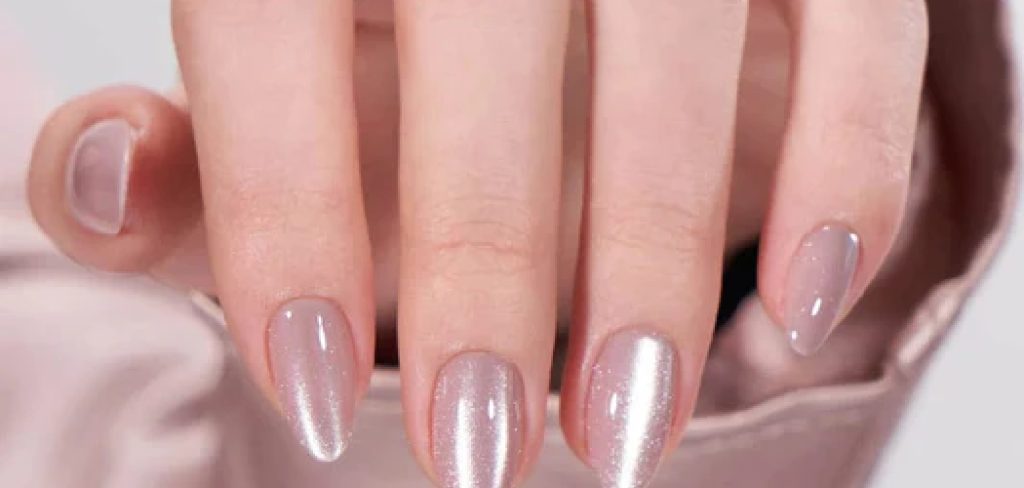
Proper storage matters more than most people realize. This guide walks you through everything—from the right supplies to the common slip-ups that ruin nails faster than you’d expect.
Why Proper Storage Matters
False nails are more delicate than they look. Acrylic and plastic press-ons can warp under heat, collect dust and oils that compromise adhesion, or lose their shape entirely if stored carelessly. Even trace amounts of moisture can degrade the glue pre-applied to some sets—often before you’ve had a chance to use them a second time.
A well-stored set can be reused multiple times, which saves money and cuts down on waste. Nails tossed into a random drawer, though? They tend to degrade within weeks. The difference between a reusable set and a ruined one often comes down to a few simple habits.
Types of False Nails
Different nail types have slightly different storage needs, so it helps to know what you’re working with:
- Press-on nails: Made from acrylic or ABS plastic—lightweight and prone to warping under heat.
- Acrylic nail tips: Thicker and more durable, but still sensitive to moisture.
- Gel false nails: Pre-made nails that require UV curing. These can become tacky or sticky if exposed to light during storage.
- Stiletto, coffin, and almond shapes: Longer, sculpted nails are particularly vulnerable to breakage or warping if not stored flat.
Supplies You’ll Need
Getting your storage setup right doesn’t require much:
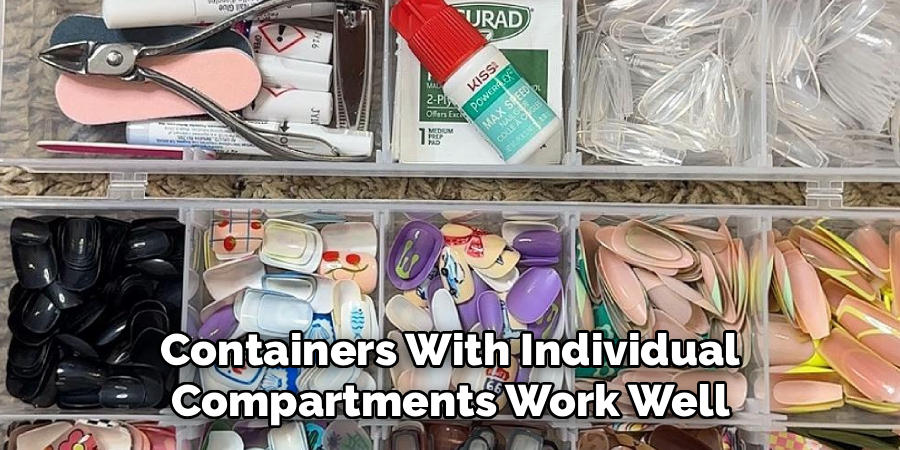
- An airtight container or nail storage box with compartments
- Zip-lock bags (for individual sets)
- Silica gel packets to absorb moisture
- Nail labels or stickers for size organization
- A cool, dark storage space away from direct sunlight
- Cotton balls or tissue paper for padding, if needed
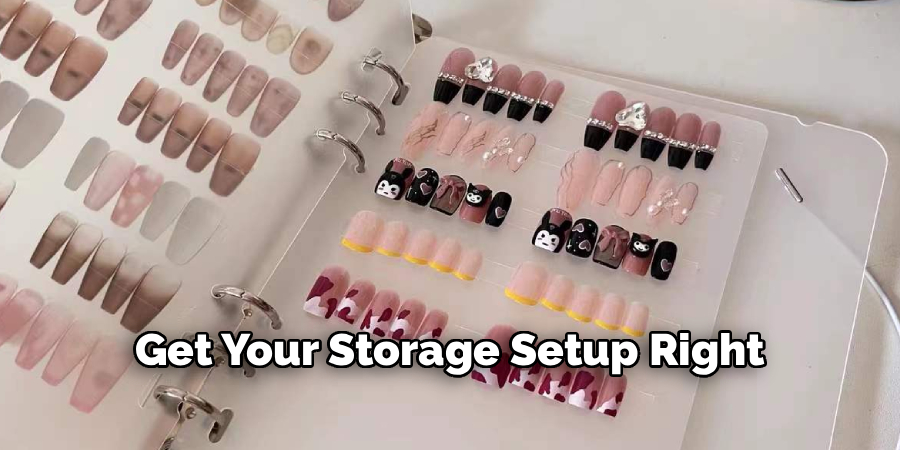
7 Simple Step-By-Step Guidelines on How to Store False Nails
Step 1: Clean the Nails Thoroughly Before Storing
Before putting any false nails away, clean them properly. Remove residual glue with a gentle nail glue remover or acetone on a cotton pad. Then wipe each nail down with a dry cloth to remove dust, oils, and any leftover adhesive—storing dirty nails traps bacteria and gradually degrades the surface.
Make sure each nail is completely dry before moving on. Even a small amount of trapped moisture can cause discoloration or stickiness, particularly with gel-style nails.
Step 2: Sort Nails by Size
Simple, yes—but genuinely transformative when it comes to reusing your sets. Group nails by size, typically labeled 0 through 9 or XS through XL, depending on the brand. Keeping sizes together means no frantic searching when you’re ready to apply them again.
Clear zip-lock bags work especially well here. You can identify nails at a glance without opening every pouch.
Step 3: Keep Them Flat to Prevent Warping
Curved or misshapen nails are nearly impossible to apply correctly. Store false nails flat rather than stacked at odd angles. A compartmentalized nail storage box is ideal—each nail sits in its own slot, free from pressure. If you’re using zip-lock bags, lay them flat in a drawer rather than standing them upright. Even slight, sustained pressure can cause plastic and acrylic nails to curve permanently.
Step 4: Use Airtight Containers
Exposure to open air accelerates degradation—especially for nails with pre-applied adhesive tabs. An airtight container keeps humidity, dust, and airborne oils away from the surface. Small acrylic containers with individual compartments work well. Alternatively, sealed zip-lock bags placed inside a larger storage box offer a double layer of protection. Add a silica gel packet to absorb any residual moisture that sneaks in over time.
Step 5: Store Away from Heat and Direct Sunlight
Heat may be the fastest way to ruin a set of false nails. Acrylic and plastic nails soften and warp at high temperatures, and UV light causes yellowing, particularly with clear or light-colored sets.
Avoid windowsills, radiators, and cars. A cool, dark drawer or a closed beauty cabinet works well. In warm climates, a temperature-regulated room may be worth considering.
Step 6: Label Everything
Labeling is one of those habits that pays off every time. Mark each bag or compartment with the nail size, the set name or color, and the date of first use. This makes it easy to grab exactly what you need—and helps you track how old each set actually is.
If you have multiple sets in similar shades, a quick label prevents the frustration of mixing nails from different sets, which often differ in thickness or curvature.
Step 7: Store the Original Packaging When Possible
The original box or tray is often the best storage solution available. It’s designed to hold those nails flat, separated, and protected. If the packaging is intact after your first use, keep it. Slide the cleaned, sorted nails back into their original slots and seal the box with a rubber band, or place it inside a zip-lock bag for added protection.
For sets that didn’t come in reusable packaging, a dedicated nail organizer box with adjustable compartments is a worthwhile purchase—especially if you use false nails regularly.
Following these steps on how to store false nails will ensure that your false nails stay in good condition and are ready to use whenever you need them. Additionally, it will save you time and money in the long run as you won’t need to keep buying new sets of false nails due to improper storage.
Common Mistakes to Avoid
Even well-intentioned storage habits can cause damage. Watch out for these:
- Storing nails while still damp, which causes sticking and potential mold
- Mixing different sets together makes it nearly impossible to match sizes later
- Leaving nails in direct sunlight, which causes yellowing and warping
- Skipping the cleaning step, which leads to sticky, bacteria-covered nails
- Overcrowding your storage container, which puts pressure on nails and distorts their shape over time
How Long Can You Store False Nails?
Stored correctly, false nails can last anywhere from six months to two years. The key variables are material, storage conditions, and whether the adhesive still performs.
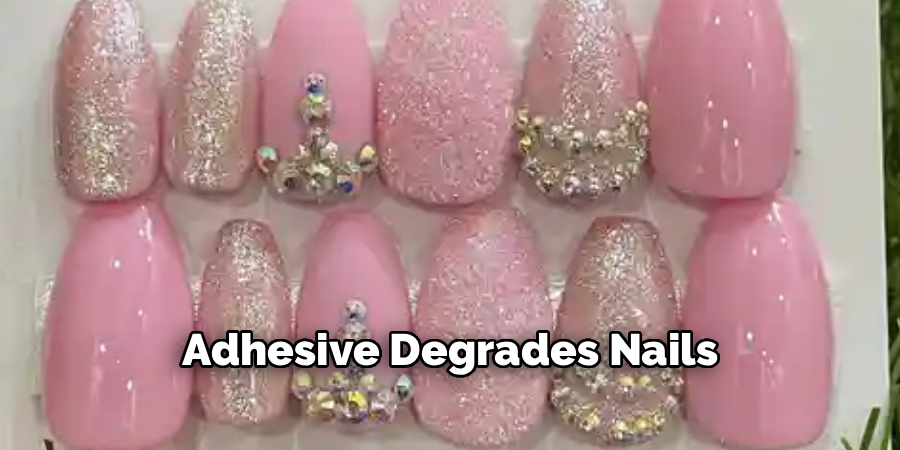
Press-on nails with pre-applied glue tabs tend to have a shorter usable lifespan—typically six to twelve months—because the adhesive degrades even in good conditions. Nails that require separate nail glue may last longer, since fresh adhesive is applied each time. Gel nails kept away from light can also maintain their quality for a year or more.
If nails have yellowed, warped, or become brittle, it’s time to replace the set—regardless of how recently you stored them.
Tips for Reusing False Nails
Reusing false nails is entirely possible—and worth doing—when handled carefully:
- Remove nails by soaking in warm, soapy water rather than forcing them off, which causes breakage
- Clean off all old glue before storing to ensure a smooth surface for re-application
- Lightly buff the inner surface before reapplying to improve adhesion
- Avoid bending or flexing nails during removal, as this can create micro-cracks that weaken the structure
- Inspect each nail before reuse and discard any that are cracked, discolored, or warped beyond repair
Frequently Asked Questions
Can You Store False Nails in Their Original Packaging After Use?
Yes—and it’s arguably the best option. The original packaging is designed to hold each nail flat and separated, which prevents warping and size mix-ups. Clean and dry your nails thoroughly before placing them back in the tray, then store the box in a cool, dark location. If the packaging isn’t resealable, secure it with a rubber band or place the whole box inside a zip-lock bag for added protection.
Do False Nails Expire or Go Bad Over Time?
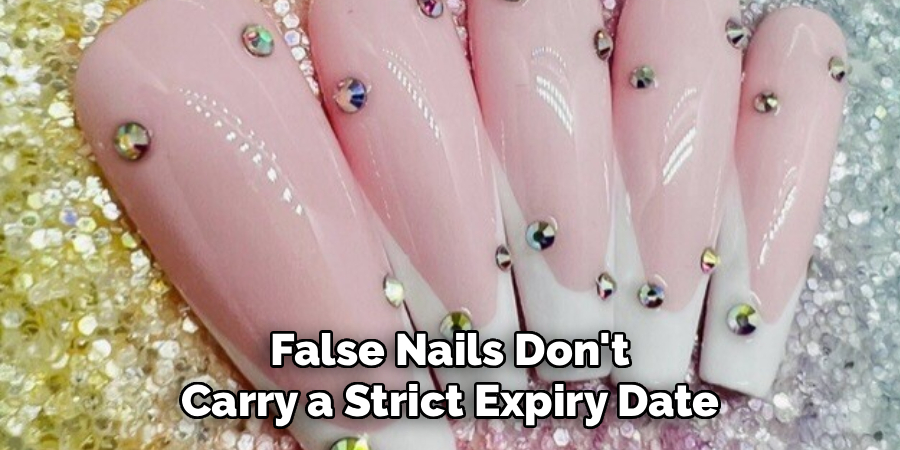
False nails don’t carry a strict expiry date, but they do degrade—particularly when stored poorly. Pre-applied adhesive tabs typically lose their stickiness after six to twelve months. Acrylic and plastic nails can become brittle or discolored after extended exposure to heat or light. As a general practice, inspect stored nails every few months and discard any showing signs of yellowing, warping, or brittleness.
What Is the Best Way to Prevent False Nails from Yellowing in Storage?
Yellowing is primarily caused by UV light and heat. Store nails in an opaque or dark container, away from windows and artificial UV sources. Keeping nails in airtight bags also reduces oxidation, which may contribute to discoloration over time. For gel-style nails especially, avoiding any light exposure during storage is essential—even brief UV contact can cause partial curing or visible color change.
Final Thoughts
Storing false nails correctly is a small habit with a meaningful payoff. Clean them, sort them by size, keep them flat and dry, and protect them from heat and light—and they’ll hold up through multiple uses.
A little organization goes a long way in preserving the quality of your sets and saving money over time. Thanks for reading this guide on how to store false nails.

About the Author
Jane Hubbard is a passionate beauty expert with a wealth of experience in makeup, hair, and overall beauty techniques. After years of working as a hairdresser specialist, she followed her entrepreneurial spirit and started her own consultancy business.
Jane has always been driven by her desire to help others feel confident in their own skin, and she does this by sharing her knowledge, experiences, and practical beauty tips. Through her consultancy, she empowers individuals to embrace their unique beauty, offering tailored guidance that boosts both self-esteem and personal style.
Professional Focus
Specializes in makeup, hairstyling, and beauty consulting.
Provides personalized beauty advice, tips, and techniques to help individuals feel confident in their appearance.
Dedicated to staying up-to-date with the latest industry trends and developments.
Passionate about creating a comfortable and empowering experience for every client.
Education History
University of Craft and Design – Bachelor of Fine Arts (BFA) in Woodworking and Furniture Design
Woodworking Apprenticeships – Extensive hands-on training with skilled craftsmen to refine carpentry and furniture making techniques
Online Courses & Masterclasses – Continued education in advanced woodworking techniques, design principles, and specialized tools
Expertise:
Makeup artistry, hairstyling, and beauty consulting.
Personalized beauty techniques to enhance confidence and self-expression.
Educating clients on how to maintain their beauty routines at home.